Environmental and water quality modelling is used to assess the transport, transformation, and fate of substances in aquatic systems, including rivers, estuaries, coastal waters, and semi-enclosed basins. We model a wide range of tracers and constituents in 2D and 3D environments, including dissolved pollutants, suspended particulate matter, salinity, nutrients, biomass, thermal discharges, radionuclides, hydrocarbons, and oil slicks. Our simulations can represent exchanges between dissolved, suspended, and bed- sediment phases, as well as the influence of hydrodynamics, stratification, mixing, and external forcing.
Modelling studies are used to inform environmental impact assessment, regulatory compliance and the design of mitigation measures, providing a quantitative basis for decision-making in complex environmental settings.
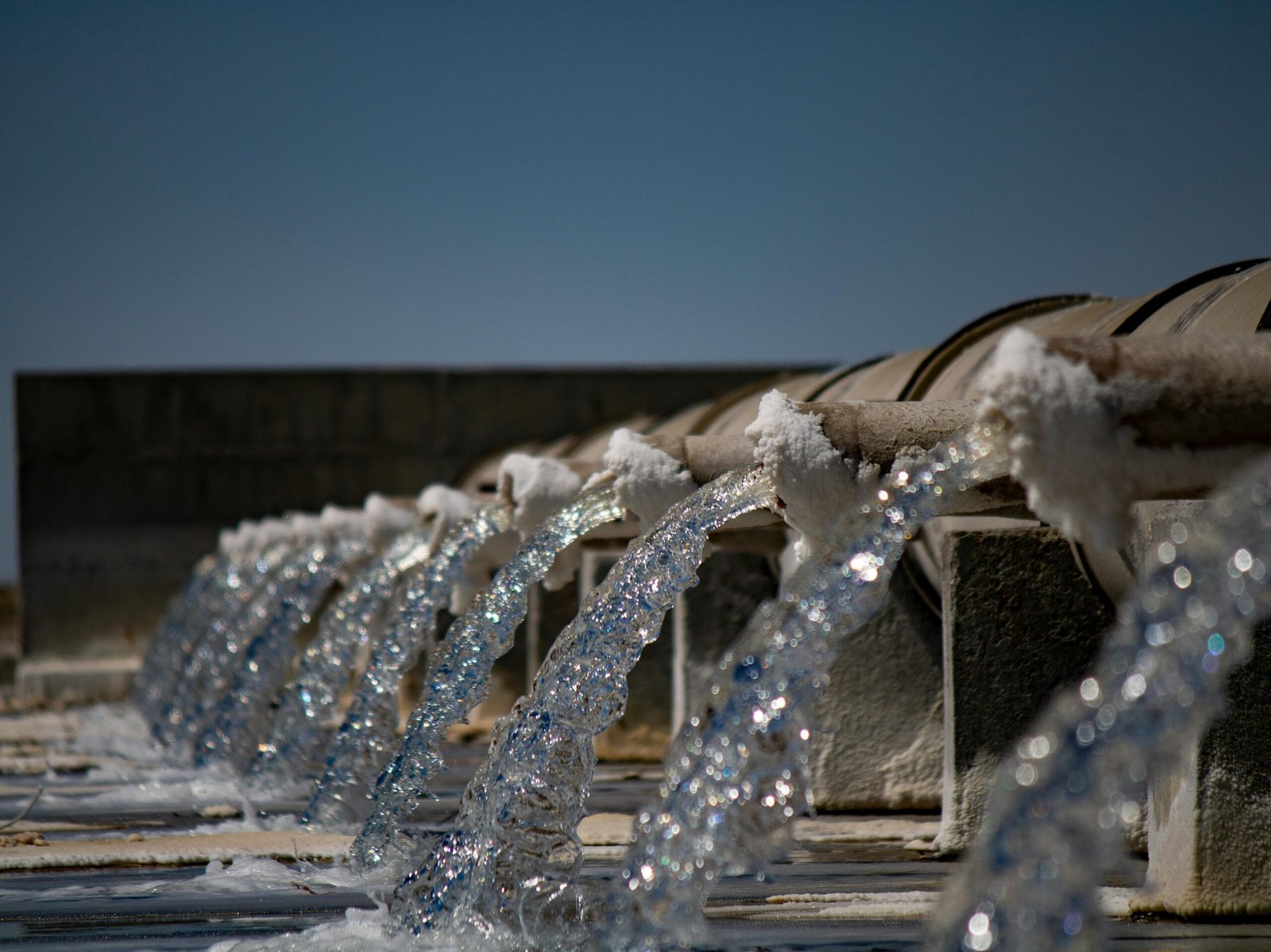
Brine Discharge Dispersion — Marine Environment
Dispersion modelling is applied to assess the behaviour and environmental footprint of industrial effluents and brine discharges in coastal and marine waters. Numerical simulations quantify plume trajectory, dilution, near-field mixing, and far-field dispersion under realistic metocean conditions.
In marine environments, dispersion is governed by the combined influence of tides, waves, wave-induced currents, ocean circulation, wind forcing, and stratification. The results provide a robust technical basis for environmental impact assessment, regulatory compliance, definition of zones of influence, and optimisation of discharge locations and operating strategies to minimise impacts on marine ecosystems and water quality.
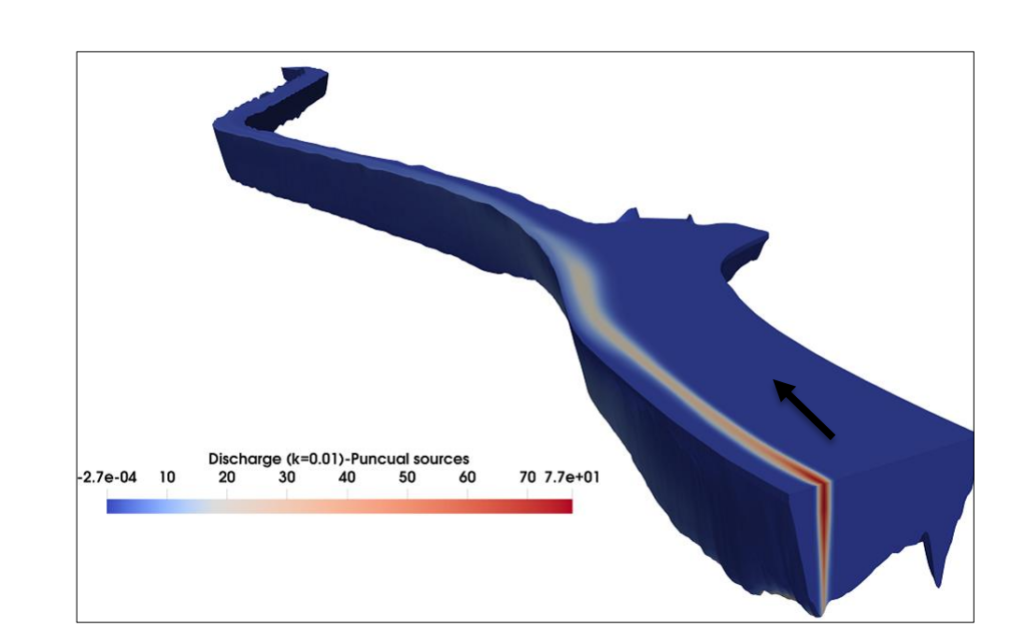
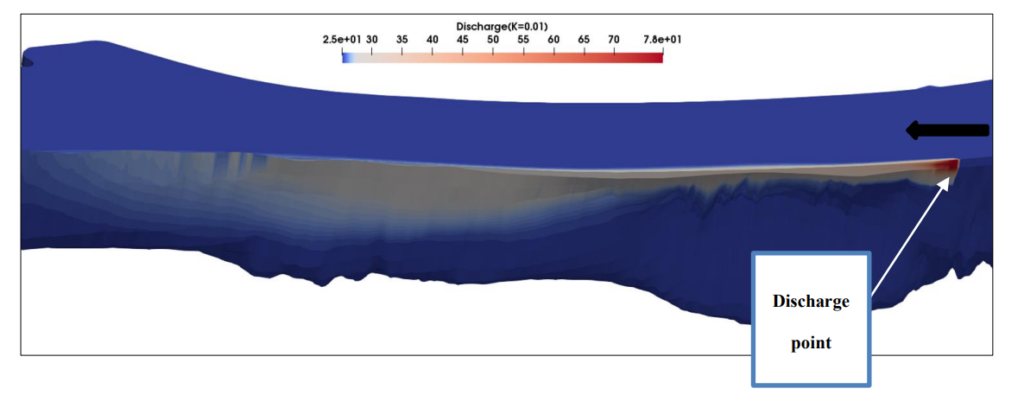
Brine Discharge Dispersion — Riverine Environment
Riverine dispersion modelling is used to assess the behaviour and environmental effects of industrial effluents and brine discharges in receiving freshwater systems. Numerical simulations quantify plume evolution, dilution capacity, near-field mixing, and far-field transport under site-specific hydraulic conditions.
In rivers, dispersion is primarily controlled by discharge, channel morphology, flow velocity, turbulence, and seasonal flow variability. The results support environmental compliance, identification of impact zones, and optimisation of discharge locations and operating conditions to reduce impacts on aquatic ecosystems and water quality.