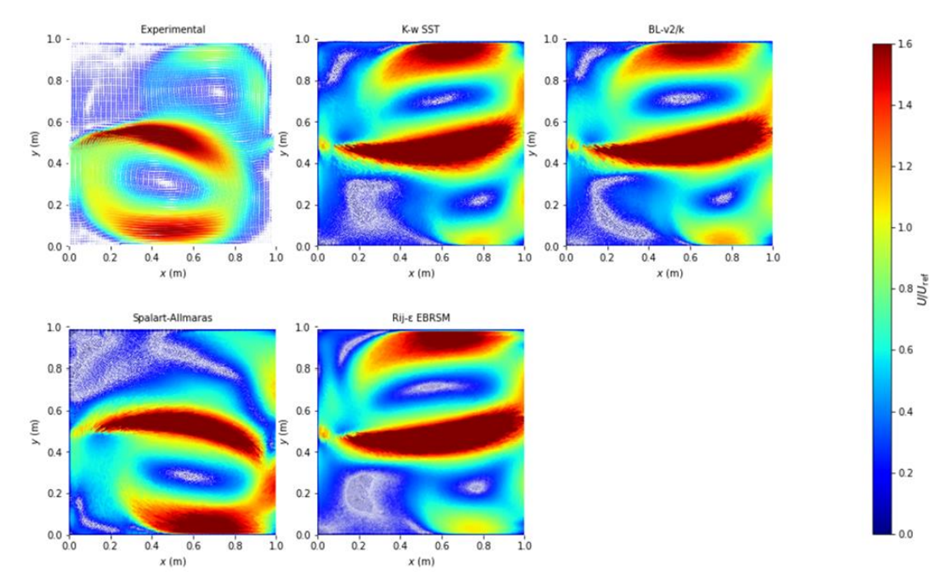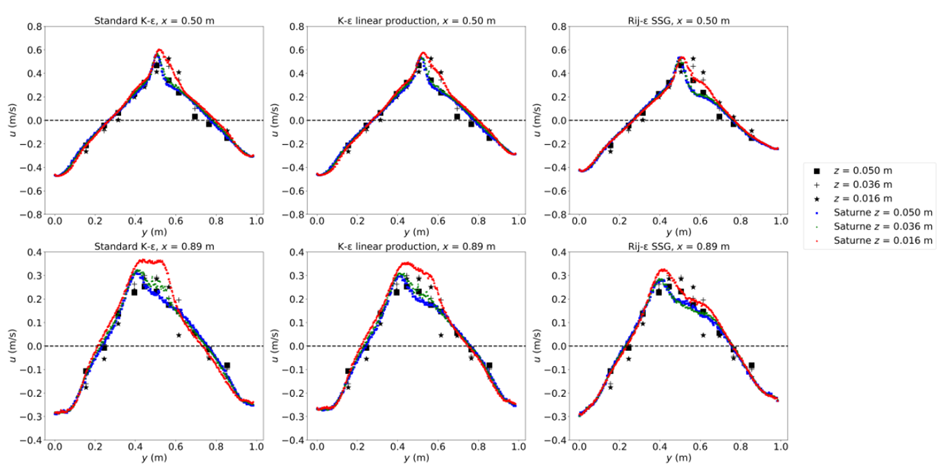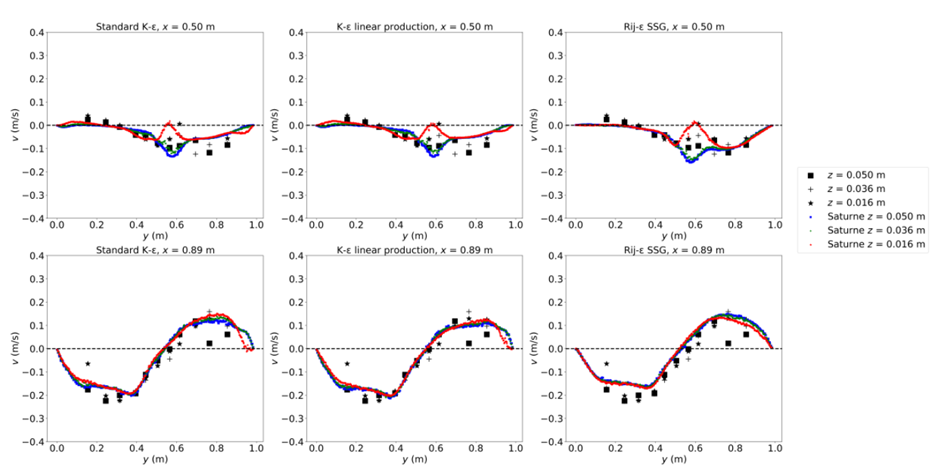
Computational Fluid Dynamics (CFD) and advanced numerical modelling are used to investigate complex flow processes that cannot be adequately described using simplified or depth-averaged approaches. High-resolution simulations provide detailed insight into flow behaviour, turbulence structures and interactions between multiple physical processes across marine, coastal and hydraulic environments.
Numerical analyses are applied to support engineering design, environmental assessment and research activities where accurate representation of flow physics is required. Modelling is undertaken using validated numerical frameworks, with careful attention to model setup, calibration and interpretation of results.
Numerical analyses are applied to support engineering design, environmental assessment and research activities where accurate representation of flow physics is required. Modelling is undertaken using validated numerical frameworks, with careful attention to model setup, calibration and interpretation of results.
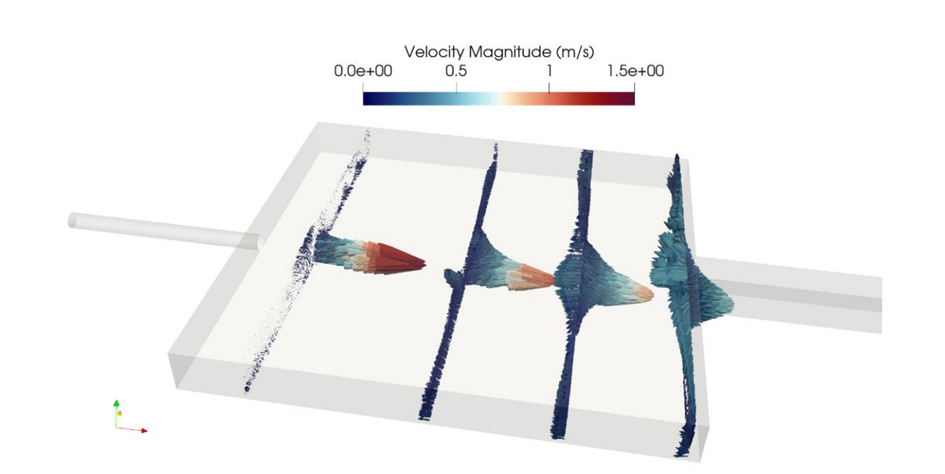
High-Resolution CFD Simulations
High-resolution CFD simulations are employed to resolve three-dimensional flow structures and spatial variability within complex geometries. Analyses capture detailed velocity fields, pressure distributions and flow separation phenomena that are critical for understanding system behaviour at local and global scales.
Applications include the assessment of flow patterns around hydraulic and marine structures, near-field mixing processes and flow–boundary interactions under a range of operational and extreme conditions.
Applications include the assessment of flow patterns around hydraulic and marine structures, near-field mixing processes and flow–boundary interactions under a range of operational and extreme conditions.
Turbulence and Flow Modelling
Advanced turbulence modelling is used to represent flow variability across a wide range of spatial and temporal scales. Numerical approaches are selected based on the dominant flow regime and study objectives, allowing the resolution of transient flow features and energy dissipation mechanisms.
Turbulence modelling supports the evaluation of hydrodynamic loads, mixing efficiency and flow-induced forces, providing robust input for engineering design and performance assessment.
Turbulence modelling supports the evaluation of hydrodynamic loads, mixing efficiency and flow-induced forces, providing robust input for engineering design and performance assessment.